
Past Cedar Hill Household Sources by Era
The prior-resident trail changes with the time period and the parcel’s county. Start with Dallas Central Appraisal District, DCAD, or Ellis Central Appraisal District, ECAD, for the current property identity, then use the county clerk records that match the parcel. Dallas County describes official records from 1846 to current, though images and indexes are not uniform. The Ellis route is different: the county provides LGS links, but the exact online cutoff and current field inventory were not confirmed. For an old Cedar Hill house, directories and newspapers often add the household layer after the deed trail is established.
| Source | Years it covers | Where held | What it can show |
|---|---|---|---|
| Dallas official records | 1846 to current, as described by county materials | Online, County Clerk, and records center | Deeds, liens, plats, grantor and grantee names, legal descriptions. |
| Ellis property records | Exact web cutoff not located | LGS links and Ellis County Clerk | Property instruments and plats for the Ellis portion of Cedar Hill. |
| Dallas Central Appraisal District (DCAD) history | Current and prior certified data | Online account and history routes | Prior-owner and deed-reference clues, not legal title. |
| Cedar Hill local directory reference | 1892 | Museum or library inquiry | An occupation snapshot; names and scan were not located. |
| Dallas directories at TSLAC | 1875 to 1991 selected years; most annual 1950 to 1979 | Austin reference room and microfilm | Person-to-address and household clues; Cedar Hill inclusion must be checked. |
| Cedar Hill Chronicle | 1965 to 1981 | UNT digital collection | Addresses, notices, obituaries, and local names. |
| Federal census | Released under the 72-year rule | NARA, FamilySearch, or library access | A household snapshot, not continuous occupancy or title. |
| EnerGov permits | Launched 2018; earlier coverage not located | Cedar Hill portal or a written Texas Public Information Act request | Construction or alteration dates and applicant details. |
Work from the latest confirmed parcel record backward. If the question is about ownership, deeds lead. If it is about who lived here before, test directories, census material, and local news after the address has been normalized. Note: Mark every entry with its date and county because a Cedar Hill postal address alone does not select the right recorder.
Cedar Hill Parcel Card for Past Households
For a Dallas-side property, DCAD’s address search provides address, owner, account, business, and map routes. Save the account number, situs address, current owner and mailing fields, legal description, subdivision, lot or block, transfer date, and structure-year clue. The location, or situs, is the parcel’s physical address. The mailing address is where tax correspondence is sent. They are not interchangeable, and neither is proof of current occupancy.
The card can also show ownership percentages, value and exemption data, improvement details, maps, and account history. That history can expose a prior owner name and recording reference. DCAD warns that account history is not a legal title document, so use it as a bridge to the clerk record rather than as the endpoint. A legal description is often more stable than an old Cedar Hill street number and can survive a renamed road or changed addressing scheme.
- Grantor / grantee
- The grantor transfers an interest in a recorded document. The grantee receives that interest.
- Chain of title
- The sequence of recorded transfers connecting one owner to earlier owners. It must be checked against the actual instruments.
- Legal description
- The land description in a deed, such as a lot and block or metes and bounds. It is more durable than an informal street reference.
- Criss-cross directory
- An address-to-name directory. A Cedar Hill-specific run was not verified, so it remains a lead to test rather than a promised record set.
Dallas Deeds Along a Cedar Hill Address Trail
Dallas Official Records Advanced Search supplies separate grantor and grantee fields alongside document type, legal description, instrument date, document number, book, volume, and page fields. It is the practical core of a Dallas County backward title search. Start with the most recent transfer found on the parcel card. Preserve the instrument number and both the execution and recording dates when they appear. Recording date tells when the clerk received the document; it is not always the date the parties signed it.
The advanced Dallas grantor-grantee screen shows the role, document, legal-description, date, and number fields that support a Cedar Hill previous-residents deed search.
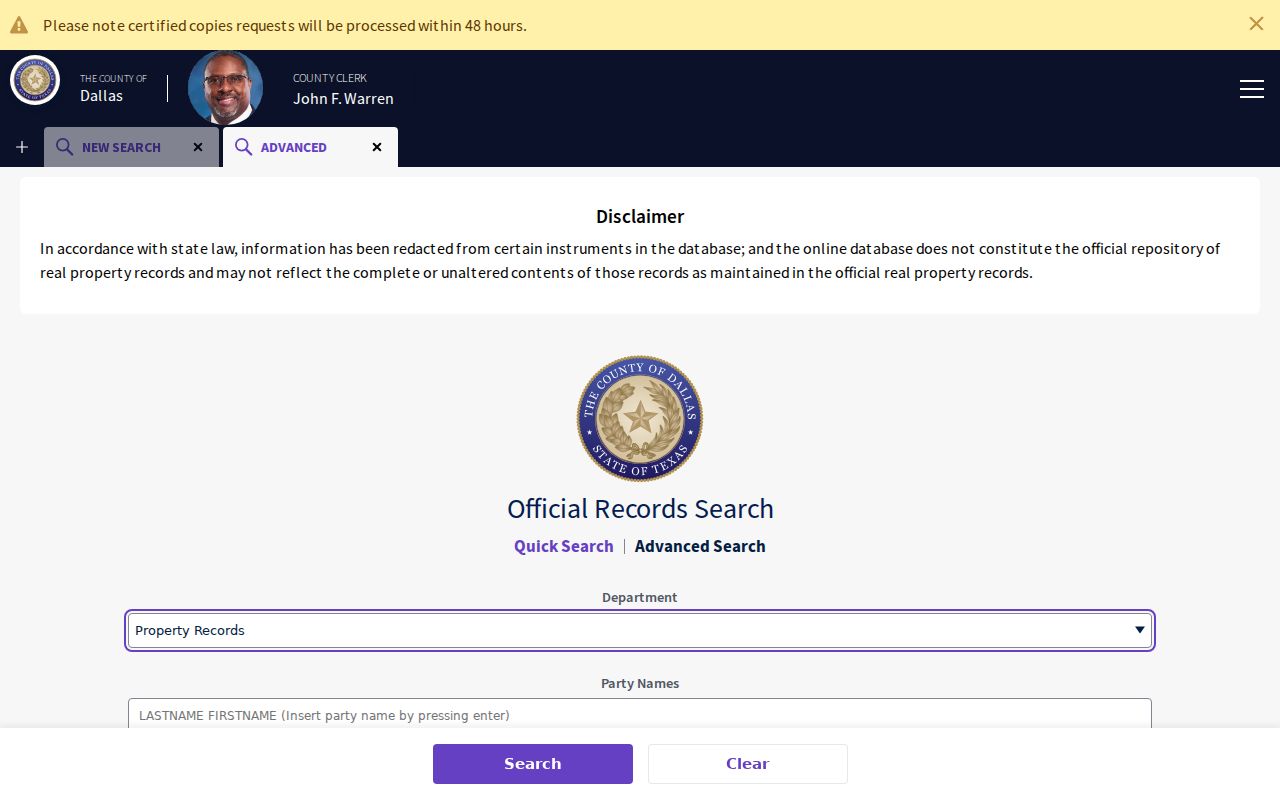
Use the legal description, grantor, grantee, date, and referenced instrument together. A name match alone is weak evidence, especially when initials or similar names appear in more than one record.
- Open the current DCAD parcel card and copy the account number, legal description, transfer date, and present owner field.
- Search the purchase deed in the Dallas index using the current owner as grantee, then narrow with the legal description, instrument date, or document number.
- Read that document’s seller, the grantor, and search that person as a grantee for the earlier acquisition of the same parcel.
- Repeat the handoff backward, comparing lot, block, subdivision, and referenced prior instrument at each transfer. Do not rely on the street address alone.
- When a needed image or index result stops, contact Dallas County Central Records or the clerk counter with the record series, date range, and volume or page clues.
Ellis County Trail for Cedar Hill Addresses
A Cedar Hill address in the southern Ellis County portion must be researched through Ellis systems, even when it uses the same postal city. The Ellis County Online Record Search page routes users to property and county-court LGS searches. The research did not confirm the live property fields, exact image price, result limits, or online cutoff. Older instructions described free guest index access and a registered account for image purchase, but that description should be verified before relying on it.
The Ellis County online-search page is the official route to the LGS property-search system used for Ellis-side Cedar Hill parcels.
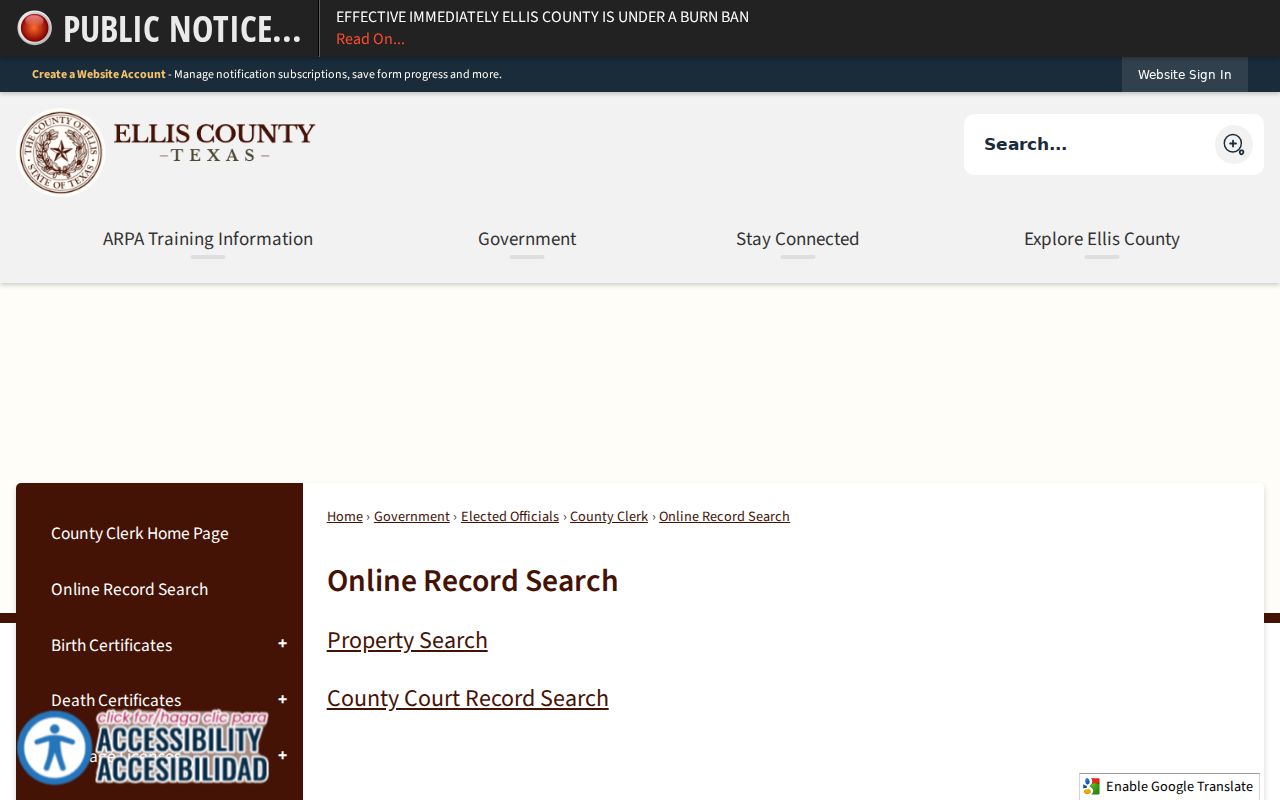
When the LGS path cannot establish a step in the chain, take the parcel description and date range to the Ellis County Clerk in Waxahachie. The clerk is custodian for real and personal property records, among other county records. County materials list its office at 109 S. Jackson Street and identify counter, mail, and online routes. The reported 2024 recording fee is not a promise about copies or image access.
Historic Cedar Hill Address Clues
Cedar Hill’s historical record trail can predate a modern street label. Local history places settlement around 1846, an 1871 town-square plat filed by J. M. Williams of the Santa Fe Railroad, and an 1856 tornado that destroyed much of the town. The railroad arrived in 1881. A deed, map, or directory may instead name the town square, a railroad context, rural route, lot, or block. Copy that older language exactly before trying to map it to a current parcel.
This is a useful local story, but not a shortcut around evidence. The 1871 plat and historic descriptions can help normalize an address. They do not prove an individual’s residence. The Cedar Hill Museum history describes a 1892 directory with two druggists, two blacksmiths, two confectioners, and one confectioner-barber. The individual names, publisher, page, and scan were not located, so ask the museum, library, or TSLAC for a source image rather than turning the occupation count into a resident list.
Cedar Hill Directory and Census Household Trail
Deeds establish a title trail, but past residents can include people who never owned the property. Cedar Hill Library links Ancestry Library Edition inside Traphene Hickman Library, FamilySearch, TexShare Digital Sanborn Maps, and local newspaper runs. The Texas State Library and Archives Commission holds Dallas city-directory runs from 1875 through selected 1991 years, including most annual years from 1950 through 1979. Cedar Hill inclusion must be tested in each Dallas volume. No Cedar Hill-specific reverse or criss-cross directory run was located.
Use the library and directory collections as a household layer, not as proof of title. The collection details and access channels belong with the Cedar Hill city directory research; here the key task is pairing each clue with its date and parcel description.
- Choose a directory year closest to a confirmed transfer or property event, then search the surname, initials, spouse clue, and address variants.
- Write down the exact printed address, notation, occupation, and page. A standard directory often works from person to address, so it may not answer an address-first question.
- Match that year to the closest released federal census. The census is a dated household snapshot and should not be read as proof of uninterrupted residence.
- Compare names and timing with the deed chain, appraisal history, and an obituary or probate lead. Resolve conflicts by returning to the original record rather than assuming a relationship.
TSLAC says its Austin print and microform material is for on-site use and staff will not search, transcribe, or scan a whole result by phone or email. That makes a catalog call or a focused visit more realistic than a broad request. Note: A directory can locate a person in a year, while the census and deed record answer separate questions about household and title.
Cedar Hill Notices and Probate Trail
The free UNT Cedar Hill Chronicle collection offers a strong name layer for 1965 through 1981. It contains 773 issues and 10,086 pages, with full-text, metadata, title, subject, creator, and name search. Search an address with a surname, school, church, organization, or obituary term. A newspaper notice can lead to a date, relative, or address, but it does not replace a deed or certified vital record.
For later local context, the library lists Cedar Hill Citizen runs from 1971 to 1974 and Cedar Hill Today from 1999 to 2009; a verified digital host for those runs was not located. Probate and obituary materials can close an heir or family-history trail. Route Dallas property and probate questions through the relevant county clerk path, and use the Ellis County Clerk for an Ellis parcel. No official Cedar Hill cemetery index or complete local obituary index was found, so library, county, and archive fallbacks remain necessary.
Lawful Cedar Hill Address-History Research
Address-history research is best suited to house history, family history, heir research, and personal curiosity. It cannot reveal every past household. Records may be indexed under a different county, old address, spouse name, initials, or legal description. Some records are restricted, redacted, missing online, or held only at the custodian’s counter. A current mailing address is not a license to treat someone as an occupant.
Lawful use. Use Cedar Hill house-history records for personal, lawful research and verify important facts with the keeper. Do not use previous-resident information to stalk, harass, track, intimidate, or harm a living person.
When a city record might fill a defined gap, Cedar Hill accepts written requests through its open-records process. Specify an existing record, address, date range, and type of document. Texas Public Information Act requests do not compel the city to create a list or override confidentiality. Verification remains with the county clerk, appraisal district, library, archive, or other custodian that holds the record.